
01
Agro Tourism
Mapro Garden
Famous for strawberry delicacies, freshly baked wood-fired pizzas, and scenic garden landscapes.
Explore Destination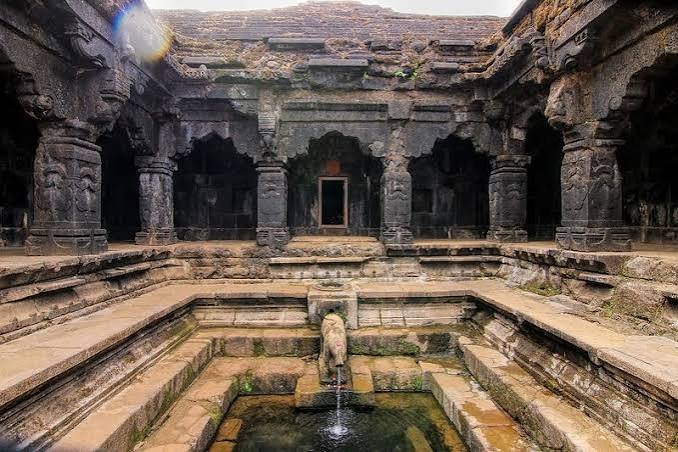
Unlike carved stone lingams seen elsewhere, the Shiva lingam inside the inner sanctum is a natural, uncarved black stone known as a swayambhu lingam. It features a distinctive ridge shaped like a rudraksha bead, along with natural indentations believed by devotees to represent the sacred five holy rivers of the Sahyadris.
The temple showcases authentic medieval Maratha-Hemadpanthi craftsmanship. The walls and pillars are made of dark volcanic basalt fitted together without mortar, carved with lotus motifs, sacred bells, and guardian deities that have withstood centuries of heavy monsoon rains.
The temple has deep ties to Maratha history. Chhatrapati Shivaji Maharaj visited this shrine in the 17th century to seek blessings, perform prayers, and donate precious metals. An ornate 300-year-old brass bell, along with historic weapons and traditional pooja relics, remains preserved within the temple complex.
| Parameter | Details |
| Distance from Town | ~6 km from Mahabaleshwar ST Bus Stand / Main Market |
| Opening Hours | 5:00 AM – 12:00 PM and 4:00 PM – 9:00 PM (Daily darshan timings) |
| Entry Fee | Free (No ticket needed for general darshan) |
| Vehicle Parking | ₹20 to ₹30 per vehicle (Paved parking lot outside temple square) |
| Time Needed | 45 minutes to 1 hour |
| Walking Distance | ~100 meters of flat stone pathways from parking |
Easy Walk for Seniors:
Tourist cabs and personal cars park right outside the village square.
The path to the temple entrance is flat and paved with smooth flagstones, making it very comfortable for senior citizens with no climbing required.
Footwear & Temple Etiquette:
Leather items and shoes must be removed before entering the stone courtyard. Managed shoe stands are available near the entrance gates.
Photography is strictly prohibited inside the inner sanctum (garbhagriha) to respect the sanctity of daily rituals.
Local Sweets & Temple Stalls:
Small traditional shops around the courtyard sell pure milk pedas, copper pooja vessels, rudraksha malas, and locally harvested raw honey.
Best Time to Visit:
All Year Round: The temple is open and conducts regular aartis throughout the year.
Mahashivratri (February/March) & Shravan Month (August/September): The shrine is decorated with flowers and oil lamps, drawing thousands of devotees for special abhishek rituals.
Time of Day: Visit early between 6:00 AM and 8:30 AM for a quiet, peaceful darshan before daytime tourist cabs arrive.
Mahabaleshwar Temple is the main anchor of the Old Mahabaleshwar spiritual circuit:
Morning (7:30 AM – 9:00 AM): Visit Mahabaleshwar Temple for peaceful morning darshan, then walk two minutes over to the Panchganga Temple (five rivers origin).
Mid-Morning (9:15 AM – 10:15 AM): Take the short scenic path behind the complex down to the ancient cliffside Krishnabai Temple.
Late Morning (10:30 AM – 12:30 PM): Drive further along the road to explore Arthur’s Seat, Marjorie Point, and Savitri Point.
Lunch (1:00 PM – 2:30 PM): Return to the village square for an authentic rural Maharashtrian lunch of hot pithla bhakri.
Afternoon & Evening (3:30 PM – 6:30 PM): Head down to Venna Lake for pedal boating and evening lakeside street food.
Explore all 35 iconic viewpoints, sacred temples, historic forts, serene lakes, and waterfalls.
Famous for strawberry delicacies, freshly baked wood-fired pizzas, and scenic garden landscapes.
Explore DestinationAsia's second-largest mountain plateau offering horse rides, caves, and sweeping valley vistas.
Explore DestinationSacred temple inside Pratapgad Fort consecrated by Chhatrapati Shivaji Maharaj in 1661.
Explore DestinationA dense UNESCO World Heritage bio-reserve sheltering diverse Sahyadri wildlife and flora.
Explore DestinationMagnificent cascading falls plunging nearly 600 feet into the verdant Venna Valley gorge.
Explore DestinationA peaceful ledge west of Connaught Peak providing wide views over the Koyna river basin.
Explore DestinationNamed after former Governor Lord Northcote, giving expansive angles across deep ravines.
Explore DestinationA sacred basalt temple adjacent to the Mahabaleshwar shrine dedicated to Lord Shiva.
Explore DestinationAncient stone shrine on a cliffside where water flows out of a Gomukh into a natural pond.
Explore DestinationHoly source temple believed to unite five sacred rivers: Krishna, Venna, Koyna, Savitri, and Gayatri.
Explore Destination16th-century Hemadpanti pilgrimage temple preserving a natural rudraksha-shaped swayambhu lingam.
Explore DestinationColonial-era recreation ground offering badminton courts, vintage pavilions, and heritage charm.
Explore DestinationBritish colonial architecture notable for housing Mahatma Gandhi during key negotiations in 1945.
Explore DestinationBuilt in 1829 for Governor Sir John Malcolm, showcasing classical British stone architecture.
Explore DestinationThe spiritual center of the region, housing the historic origins of the town and sacred legends.
Explore DestinationA prime viewpoint offering expansive angles over the lush Koyna river basin and mountain ridges.
Explore DestinationThe vast backwater reservoir of Koyna Dam stretching over 50 km, ideal for speedboating.
Explore DestinationNicknamed 'Mini Kashmir', famous for water sports, lake camping, and strawberry farm agro-tourism.
Explore DestinationA serene waterfall cascading down green valleys, historically cultivated by Chinese gardeners.
Explore DestinationNestled along a secluded forest trail connecting Lodwick point directly to the valley floor.
Explore DestinationCentrally located freshwater lake ideal for row boating, pedal boating, horse rides, and street treats.
Explore DestinationAlso known as Blue Valley, offering sights of quiet hamlets, cascading streams, and green slopes.
Explore DestinationCommands a straight vertical drop down to the canyon floor where the holy Savitri river begins.
Explore DestinationPerched halfway toward Arthur's Seat, looking 500 meters down into Konkan valleys.
Explore DestinationA quiet vantage point surrounded by oak foliage, offering clear views of the Chinaman waterfall.
Explore DestinationFeatures an obelisk monument erected in memory of General Lodwick overlooking deep ravines.
Explore DestinationThe second highest point in the region, formerly known as Mount Olympia with 360-degree vistas.
Explore DestinationA natural rock cliff that resembles an elephant's head and trunk pointing toward the Sahyadris.
Explore DestinationThe historic summer retreat of the Governor of Maharashtra surrounded by heritage forestry.
Explore DestinationLegendary hill citadel that witnessed the historic encounter between Shivaji Maharaj and Afzal Khan.
Explore DestinationDiscovered in 1830, commanding dramatic dual vistas over the Koyna and Savitri river valleys.
Explore DestinationOne of the earliest explored vantage spots, widely famous for its evening sunset horizon.
Explore DestinationThe highest altitude plateau in Mahabaleshwar featuring three observation towers to view dawn.
Explore DestinationOffers sweeping panoramas of Dhom Dam, Kamalgad, and the deep blue waters of the Krishna basin.
Explore DestinationMahabaleshwar's most iconic cliff overlooking the deep abyss between Konkan and the Deccan.
Explore Destination



Mahabaleshwar Tour Packages is a specialized division of Pravas Sukhacha Network & Ecosystem.
Pravas Sukhacha Office 201, 2nd Floor, Raigad Complex, Salatwada Main Road, Vadodara – 390001, Gujarat
Business Hours:
Monday to Saturday: 10:00 AM – 7:00 PM
Sunday: Closed
Copyright © 2026 All Right Reserved Mahabaleshwar Tour Packages