
01
Agro Tourism
Mapro Garden
Famous for strawberry delicacies, freshly baked wood-fired pizzas, and scenic garden landscapes.
Explore Destination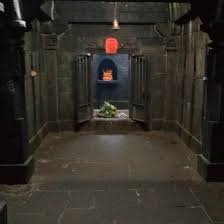
While large crowds gather at the Mahabaleshwar and Panchganga temples, many tourists walk right past Atibaleshwar Temple. This makes it one of the most peaceful spots in the village, where you can sit quietly without waiting in long queues or dealing with noisy groups.
The temple stands out for its unique exterior stepped-roof structure and dome. Guarding the entrance is a carved stone Nandi bull, leading into an atmospheric inner hall built from weathered black basalt blocks.
Unlike standalone shrines, Atibaleshwar is directly tied to the folklore of the region’s origin. Visiting both Mahabaleshwar and Atibaleshwar completes the traditional mythological story of the twin brothers who once ruled these mountain ranges.
| Parameter | Details |
| Distance from Town | ~6 km from Mahabaleshwar ST Bus Stand / Main Market |
| Opening Hours | 6:00 AM – 8:00 PM (Daily) |
| Entry Fee | Free (No ticket needed) |
| Vehicle Parking | ₹20 to ₹30 per vehicle (Shared parking lot at Old Mahabaleshwar village square) |
| Time Needed | 20 to 30 minutes |
| Walking Distance | ~50 meters of flat stone path from parking |
Effortless for Senior Citizens:
The temple is located right in the main village square across from the Mahabaleshwar Temple.
There are no steep steps or rough trails to hike, making it very comfortable and easy for elderly travelers.
Footwear & Temple Respect:
Remove your shoes before stepping onto the raised stone plinth.
Photography is usually permitted outside and in the main hall, but maintain quiet respect inside the sanctum area.
No Waiting in Line:
Because it is far less crowded than the main Mahabaleshwar Temple, this is the best place in the village to sit in silent reflection or do a relaxed pooja without feeling rushed.
Best Time to Visit:
All Year Round: The temple remains open for daily darshan throughout the year.
Mahashivratri (February/March): The temple is decorated with oil lamps and traditional flowers, holding special significance alongside the main shrine.
Time of Day: Early morning between 7:00 AM and 9:00 AM is best for cool mountain air and complete morning silence.
Atibaleshwar Temple is part of the four-temple heritage circuit in Old Mahabaleshwar:
Morning (7:30 AM – 8:30 AM): Visit Mahabaleshwar Temple for morning darshan and to see the swayambhu Shiva lingam.
Morning (8:30 AM – 9:00 AM): Step directly across the pathway to Atibaleshwar Temple to admire the stone Nandi and stepped dome in a quiet setting.
Mid-Morning (9:00 AM – 9:45 AM): Walk 100 meters across the courtyard to Panchganga Temple to see the Gomukh water spouts.
Late Morning (9:45 AM – 10:45 AM): Take the short path behind the square down to the cliffside Krishnabai Temple.
Afternoon (11:00 AM – 1:30 PM): Continue along the northern ridge to explore Arthur’s Seat and Marjorie Point.
Lunch (1:30 PM onwards): Return to the village square for an authentic lunch of hot pithla and bhakri.
Explore all 35 iconic viewpoints, sacred temples, historic forts, serene lakes, and waterfalls.
Famous for strawberry delicacies, freshly baked wood-fired pizzas, and scenic garden landscapes.
Explore DestinationAsia's second-largest mountain plateau offering horse rides, caves, and sweeping valley vistas.
Explore DestinationSacred temple inside Pratapgad Fort consecrated by Chhatrapati Shivaji Maharaj in 1661.
Explore DestinationA dense UNESCO World Heritage bio-reserve sheltering diverse Sahyadri wildlife and flora.
Explore DestinationMagnificent cascading falls plunging nearly 600 feet into the verdant Venna Valley gorge.
Explore DestinationA peaceful ledge west of Connaught Peak providing wide views over the Koyna river basin.
Explore DestinationNamed after former Governor Lord Northcote, giving expansive angles across deep ravines.
Explore DestinationA sacred basalt temple adjacent to the Mahabaleshwar shrine dedicated to Lord Shiva.
Explore DestinationAncient stone shrine on a cliffside where water flows out of a Gomukh into a natural pond.
Explore DestinationHoly source temple believed to unite five sacred rivers: Krishna, Venna, Koyna, Savitri, and Gayatri.
Explore Destination16th-century Hemadpanti pilgrimage temple preserving a natural rudraksha-shaped swayambhu lingam.
Explore DestinationColonial-era recreation ground offering badminton courts, vintage pavilions, and heritage charm.
Explore DestinationBritish colonial architecture notable for housing Mahatma Gandhi during key negotiations in 1945.
Explore DestinationBuilt in 1829 for Governor Sir John Malcolm, showcasing classical British stone architecture.
Explore DestinationThe spiritual center of the region, housing the historic origins of the town and sacred legends.
Explore DestinationA prime viewpoint offering expansive angles over the lush Koyna river basin and mountain ridges.
Explore DestinationThe vast backwater reservoir of Koyna Dam stretching over 50 km, ideal for speedboating.
Explore DestinationNicknamed 'Mini Kashmir', famous for water sports, lake camping, and strawberry farm agro-tourism.
Explore DestinationA serene waterfall cascading down green valleys, historically cultivated by Chinese gardeners.
Explore DestinationNestled along a secluded forest trail connecting Lodwick point directly to the valley floor.
Explore DestinationCentrally located freshwater lake ideal for row boating, pedal boating, horse rides, and street treats.
Explore DestinationAlso known as Blue Valley, offering sights of quiet hamlets, cascading streams, and green slopes.
Explore DestinationCommands a straight vertical drop down to the canyon floor where the holy Savitri river begins.
Explore DestinationPerched halfway toward Arthur's Seat, looking 500 meters down into Konkan valleys.
Explore DestinationA quiet vantage point surrounded by oak foliage, offering clear views of the Chinaman waterfall.
Explore DestinationFeatures an obelisk monument erected in memory of General Lodwick overlooking deep ravines.
Explore DestinationThe second highest point in the region, formerly known as Mount Olympia with 360-degree vistas.
Explore DestinationA natural rock cliff that resembles an elephant's head and trunk pointing toward the Sahyadris.
Explore DestinationThe historic summer retreat of the Governor of Maharashtra surrounded by heritage forestry.
Explore DestinationLegendary hill citadel that witnessed the historic encounter between Shivaji Maharaj and Afzal Khan.
Explore DestinationDiscovered in 1830, commanding dramatic dual vistas over the Koyna and Savitri river valleys.
Explore DestinationOne of the earliest explored vantage spots, widely famous for its evening sunset horizon.
Explore DestinationThe highest altitude plateau in Mahabaleshwar featuring three observation towers to view dawn.
Explore DestinationOffers sweeping panoramas of Dhom Dam, Kamalgad, and the deep blue waters of the Krishna basin.
Explore DestinationMahabaleshwar's most iconic cliff overlooking the deep abyss between Konkan and the Deccan.
Explore Destination



Mahabaleshwar Tour Packages is a specialized division of Pravas Sukhacha Network & Ecosystem.
Pravas Sukhacha Office 201, 2nd Floor, Raigad Complex, Salatwada Main Road, Vadodara – 390001, Gujarat
Business Hours:
Monday to Saturday: 10:00 AM – 7:00 PM
Sunday: Closed
Copyright © 2026 All Right Reserved Mahabaleshwar Tour Packages