Author name: yash soman

Destination

Raj Bhavan

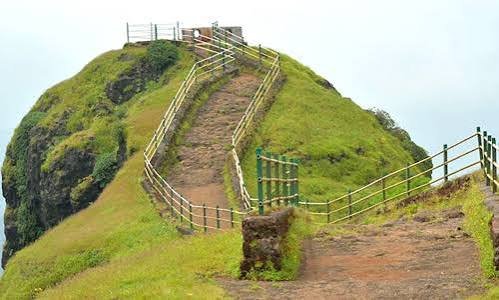
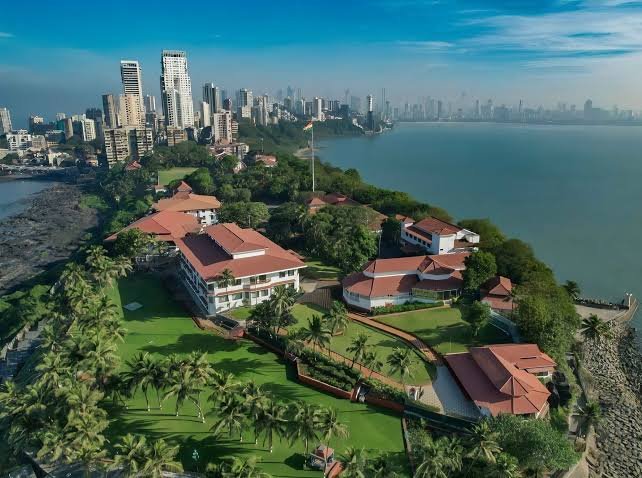
Raj Bhavan – Mahabaleshwar Raj Bhavan Mahabaleshwar: The Complete Visitor & Heritage Guide While most travelers visit Mahabaleshwar for its clifftop viewpoints and waterfalls, the hill station also preserves significant colonial-era architectural heritage. Among its most prestigious estates is Raj Bhavan (historically named The Terraces and officially designated Lok Bhavan), located in the quiet, forested ridge sector near Connaught Peak Road.Constructed during the British Raj era, this sprawling property serves as the official Summer Residence of the Governor of Maharashtra. Surrounded by manicured gardens, century-old silver oak trees, and high-security pine groves, Raj Bhavan represents the executive history of the Bombay Presidency, when government operations shifted from the sultry coastal heat of Bombay up into the cool Sahyadri mountains for the summer months. What Makes Raj Bhavan Different? 1. Summer Seat of State Governance Maharashtra has four official Raj Bhavan complexes: Mumbai (Malabar Hill), Pune, Nagpur, and Mahabaleshwar. During peak summer (typically April and May), the Governor of Maharashtra resides at this estate for official retreat periods, hosting district administrative reviews and state delegates. 2. Colonial Heritage Architecture (“The Terraces”) Acquired by the British administration in 1884 and inducted into government house records in 1886, the mansion features classic Victorian-colonial stone architecture. It was designed with sloping red-tiled roofs, broad covered wooden verandahs, vintage fireplaces, and multi-tiered botanical garden terraces tailored to the heavy rainfall climate of the plateau. 3. High-Security Conservation Zone Unlike commercial tourist stops filled with street hawkers and loud music, the area surrounding Raj Bhavan is one of the quietest green belts in Mahabaleshwar. The surrounding pine woods and canopy-lined avenue roads offer a clean, tranquil atmosphere where birds and wild squirrels are commonly spotted. Key Visitor Information Frequently Asked Questions (FAQ) 1. Can tourists go inside the Raj Bhavan bungalow in Mahabaleshwar? No, general walk-in entry into the mansion and inner residential lawns is restricted due to security protocols. It is the active summer residence of the Governor of Maharashtra. Visitors primarily admire the heritage architecture, gated grounds, and lush pine-covered estate from the surrounding public road. 2. Is there an entry ticket or counter at Raj Bhavan Mahabaleshwar? No, there is no public ticket counter. It is an official government property, not a commercial tourist park. 3. What was Raj Bhavan known as during the British era? It was originally known as The Terraces and was purchased by the British administration in the 1880s to serve as the summer residence for the Governors of Bombay.
Destination

Pratapgad Fort

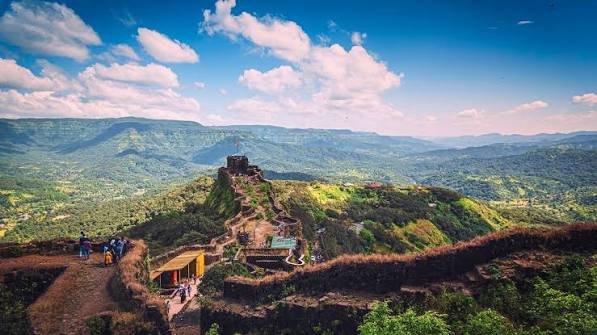
Pratapgad Fort – Mahabaleshwar Pratapgad Fort Mahabaleshwar: The Complete Visitor Guide If the viewpoints of Mahabaleshwar showcase the natural beauty of the Sahyadri range, Pratapgad Fort brings its valor, heritage, and military genius to life. Located about 21 km west of Mahabaleshwar town toward the Konkan valley, this majestic hill fortress stands tall at an altitude of approximately 1,080 meters (3,540 feet) above sea level.Commissioned by Chhatrapati Shivaji Maharaj in 1656 and constructed under the supervision of his Prime Minister Moropant Trimbak Pingle, Pratapgad (literally “Valour Fort”) was built to control the strategic trade and military routes connecting the Deccan plateau with the Konkan coast. It is world-renowned as the site of the historic Battle of Pratapgad (1659), where Chhatrapati Shivaji Maharaj defeated the formidable Bijapur general Afzal Khan. What Makes Pratapgad Fort Different? 1. A Living Chapter of Maratha History Unlike ruined ramparts found on many isolated hills, Pratapgad is an exceptionally well-preserved living fortress. Standing at the base and walking through the monumental double-gate bastion—the Maha Darwaja—transports you directly into the 17th century. The fort features the sacred Bhavani Mata Temple, which houses the black stone deity consecrated personally by Chhatrapati Shivaji Maharaj, as well as a historic temple dedicated to Lord Shiva at the upper citadel. 2. Dual Citadel Architecture (Bale Killa & Lower Fort) Pratapgad is divided into two distinct defensive tiers: The Lower Fort (Tale Killa): Encircled by fortified bastions, it houses the Bhavani Mata Temple, courtyards, living quarters, and the historic memorial spots. The Upper Citadel (Bale Killa): Situated on the highest rocky crest of the mountain, surrounded on all sides by sheer precipices. Here lies the Kedareshwar Temple and the expansive open vantage grounds overlooking the entire surrounding valley. 3. Striking 360-Degree Konkan & Ghat Panoramas Because Pratapgad sits atop an isolated mountain spur extending into the Konkan basin, looking out from its bastions—especially from Punishment Point (Kadelot Point) and the northern watchtowers—delivers an unmatched 360-degree vista of the deep forested Jawali valley, the winding roads of the Poladpur Ghat, and the towering distant cliffs of Mahabaleshwar. Key Visitor Information Frequently Asked Questions (FAQ) 1. Is Pratapgad Fort suitable for senior citizens? The fort requires climbing around 450 to 500 stone stairs. While healthy seniors can manage the climb at a gentle pace with frequent rest stops, palanquin (doli) services are readily available at the base parking lot for elderly visitors or those with knee discomfort. 2. Is there an entry ticket for Pratapgad Fort? No, entry to Pratapgad Fort is completely free. Visitors only need to pay the nominal vehicle parking fee at the base. 3. Are guides necessary to explore the fort? While not mandatory, hiring an authorized local guide (available at the base for ₹300–₹500) is highly recommended. They provide invaluable historical insights into the battle tactics, architecture, and hidden details of the fort that you would otherwise miss.

Destination

Lingmala Waterfall

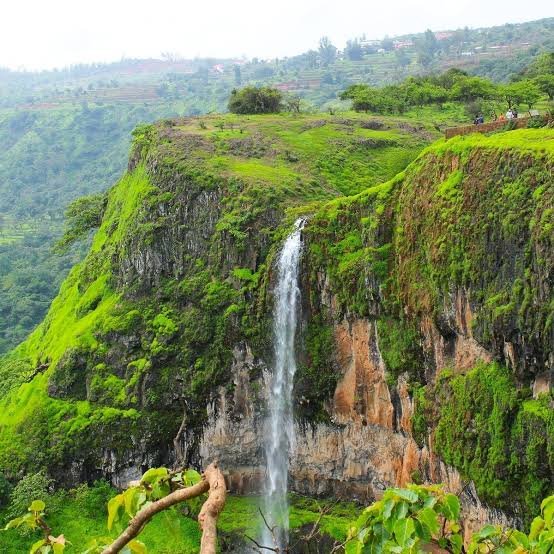
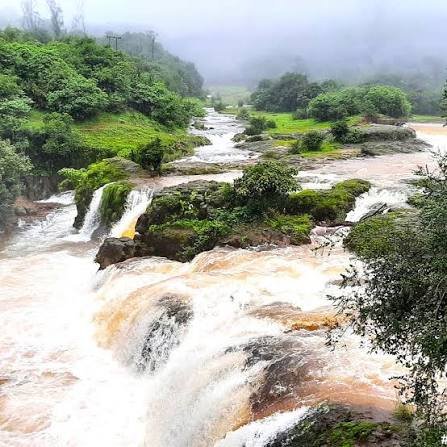
Lingmala Waterfall – Mahabaleshwar Lingmala Waterfall Mahabaleshwar: The Complete Visitor Guide If you want to experience the raw natural power of water cutting through the Sahyadri mountains rather than just standing on a scenic cliff ledge, Lingmala Waterfall is the premier nature spot on the plateau. Located roughly 6 km east of Mahabaleshwar town along the Mahabaleshwar–Panchgani highway, this forested cascade sits tucked inside a lush valley managed by the Maharashtra Forest Department.Lingmala is famous because it actually consists of two separate waterfalls along a single forest nature trail: a gentle, accessible mini-waterfall upstream, and a sheer 600-foot main plunge waterfall crashing down into the Venna Valley. What Makes Lingmala Waterfall Different? 1. The Two-in-One Waterfall System Entering the forest gate leads down a paved jungle pathway that splits into two routes: The Mini / Small Waterfall: Located about a 10-minute walk (approx. 400 to 500 meters) from the ticket booth. It features shallow rocky pools where water cascades gently over boulders. It is safe for dipping your feet or for families with young children. The Main Giant Waterfall: Continuing an extra 15 to 20 minutes down a designated trail and flight of stone steps leads to the main viewing platform. From this cliff balcony, you watch the roaring torrent plunge nearly 600 feet straight into the gorge below, sending up mist and cool spray across the valley. 2. Shaded Rainforest Canopy Walk Unlike bare, sun-exposed cliff lookouts, the trail to Lingmala cuts beneath dense silver oak trees, wild ferns, and thick moss-covered canopy. Even on bright afternoons, the trail stays cool, shaded, and alive with bird calls, cicadas, and the occasional sighting of the Malabar giant squirrel. 3. Strict Forest Conservation & Controlled Access Because Lingmala is an eco-sensitive forest zone, it is kept clean and controlled. The forest department maintains clear paved trails, waste bins, and secure metal barricades at the observation decks to prevent dangerous climbing near the slippery drop-offs. Key Visitor Information Frequently Asked Questions (FAQ) 1. Is Lingmala Waterfall suitable for senior citizens? Partially. Seniors can comfortably walk the flat 400-meter path to the small/mini waterfall. However, reaching the main viewing deck requires climbing down and up around 200 stone steps, which can be taxing for those with knee problems. 2. Can we swim or take a bath under Lingmala Waterfall? No. Swimming under the main 600-foot waterfall is strictly banned by the forest department for visitor safety. Tourists can only dip their feet in the designated shallow streams near the mini-waterfall area when water levels are safe. 3. Is there an entry ticket for Lingmala Waterfall? Yes. Because it is a protected forest reserve, there is an official entry fee of approximately ₹20 to ₹25 per person, plus a nominal parking charge for private vehicles.

Destination

Elphinstone Point

Elphinstone Point – Mahabaleshwar Elphinstone Point Mahabaleshwar: The Complete Visitor Guide If you are driving along the scenic ridge road toward Arthur’s Seat, Elphinstone Point is one of the grandest clifftop lookouts on the entire plateau. Discovered in 1830 by Dr. Murray, this lofty viewpoint was named in honor of Mountstuart Elphinstone, the distinguished Governor of the Bombay Presidency who pioneered early development in Western India.Perched high on the northwestern edge of the Mahabaleshwar tableland, Elphinstone Point commands an open vantage point over two entirely distinct river valleys. While many tourists rush straight to Arthur’s Seat and bypass this spot, seasoned travelers consider Elphinstone Point superior for peaceful, uninterrupted canyon panoramas without the heavy tourist congestion. What Makes Elphinstone Point Different? 1. Dual Valley Split (Koyna on the Left, Savitri on the Right) The geographic placement of this cliff is unique. Standing on the observation terrace, you look down between two giant mountain valleys: To your right: The canyon slopes where the Savitri River originates and descends toward the Konkan plains. To your left: The deep, verdant Koyna River Valley bordered by the protected forest corridors of the Sahyadri. The dramatic vertical ravine separating Elphinstone Point from Arthur’s Seat provides a vivid sense of depth and scale. 2. Clear View of Pratapgad Fort On clear days, looking across the western valley reveals an uninterrupted sightline of the ramparts of Pratapgad Fort resting atop its solitary mountain spur in the distance. Seeing the fortress framed between two deep gorges helps you appreciate why Chhatrapati Shivaji Maharaj chose this specific landscape for defensive military architecture. 3. Quieter, Relaxed Ambience Because mass tour buses tend to congregate primarily at Arthur’s Seat, Elphinstone Point remains comparatively tranquil. It features a broad, open terrace with stone seating benches, making it an ideal spot for landscape photographers, birdwatchers, and families who want to absorb the mountain breeze without shoulder-to-shoulder crowds. Key Visitor Information Frequently Asked Questions (FAQ) 1. Is Elphinstone Point suitable for elderly visitors? Yes. Unlike Arthur’s Seat which requires descending deep stone stairways, the viewing deck at Elphinstone Point is reached via a short, flat, paved walk from the parking area, making it very accessible for seniors and families with strollers. 2. Can we see Pratapgad Fort from Elphinstone Point? Yes, on days with good atmospheric clarity, you get a direct view across the western canyon toward the historic hill fort of Pratapgad standing out against the mountain ridge. 3. Is there an entry ticket for Elphinstone Point? No, admission to the viewpoint is completely free. You only need to pay the nominal vehicle parking fee (around ₹30 to ₹50) if you arrive by private car, taxi, or two-wheeler.

Destination

Bombay Point

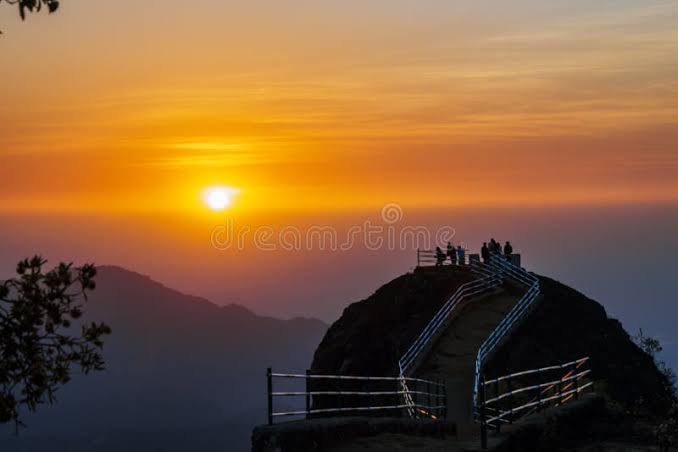
Bombay Point – Mahabaleshwar Bombay Point (Sunset Point) Mahabaleshwar: The Complete Visitor Guide If your morning in Mahabaleshwar begins with the crisp dawn at Wilson Point, your evening naturally belongs at Bombay Point. Known locally and across tourist circuits as Sunset Point (and occasionally called Mumbai Point), this is widely regarded as the oldest documented viewpoint in Mahabaleshwar. The point earned its historical name because it is situated right along the historic Old Bombay Road that once connected the hill station down toward the Konkan plains and onward to Mumbai. Sitting on a broad, natural cliff balcony facing west, Bombay Point transforms every evening into a bustling open-air gathering where tourists, families, and couples assemble to watch the sun sink beneath the jagged silhouettes of the Sahyadri mountains. What Makes Bombay Point Different? 1. The Direct Western Sunset Alignment Unlike points like Arthur’s Seat or Kate’s Point which face deep northern or eastern valleys, Bombay Point faces unobstructed westward skies. The horizon drops down into a series of rolling Sahyadri ridges, allowing visitors to view the complete solar descent as the sky shifts from vivid gold to fiery crimson and twilight violet. 2. The Carnival-Style “Chowpatty” Atmosphere Unlike the quiet, contemplative nature trails found elsewhere in town, Bombay Point has an energetic, festival-like vibe between 4:30 PM and 6:30 PM. The entrance plateau is packed with lively street stalls, gaming booths (balloon shooting, ring toss), and pony rides for kids. It functions as both a natural lookout and a lively evening food promenade. 3. Broad Clifftop Promenade The viewing area features a wide, stone-paved promenade with protective iron railings that run along the cliff ridge. Because the platform is wide rather than a narrow ledge, it comfortably accommodates hundreds of visitors simultaneously without feeling cramped along the rim. Just to the left of the main promenade sits a smaller adjoining ledge known locally as Lover’s Point. Key Visitor Information Frequently Asked Questions (FAQ) 1. Is Bombay Point the same as Sunset Point? Yes, they are identical. The official name is Bombay Point because of its location on the historic Old Bombay Road, but locals and travel itineraries almost universally call it Sunset Point or Mumbai Point. 2. What is the best time of day to reach Bombay Point? Arrive between 4:30 PM and 5:00 PM. Sunsets usually occur between 5:45 PM and 6:30 PM depending on the month, but arriving 45 minutes early ensures you find vehicle parking without getting stuck in traffic jams along the approach road. 3. Is Bombay Point accessible for elderly travelers and wheelchairs? Yes, exceptionally so. Unlike Arthur’s Seat which requires descending hundreds of stone stairs, Bombay Point is a flat, paved plateau. Seniors can walk comfortably from the car directly to the railings or sit on stone benches facing the valley.

Destination

Wilson Point

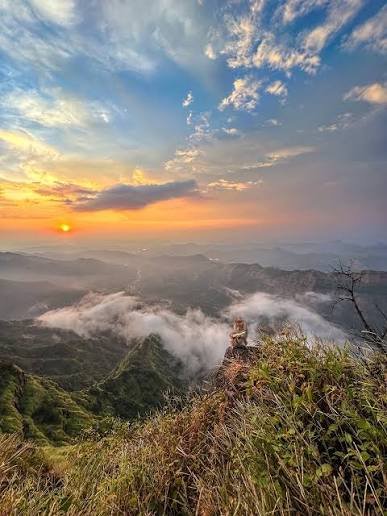
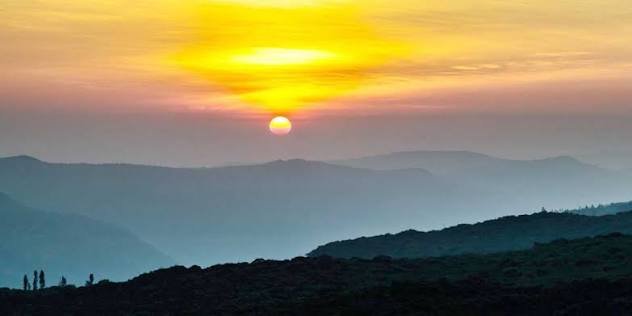
Wilson Point – Mahabaleshwar Wilson Point (Sunrise Point) Mahabaleshwar: The Complete Visitor Guide If you want to catch the first rays of dawn breaking over the Sahyadri mountains, Wilson Point is the place to be. Originally known as Sindola Hill by locals, the point was later named after Sir Leslie Wilson, who served as the Governor of Bombay from 1923 to 1926. Wilson Point holds the distinction of being the highest geographic elevation in Mahabaleshwar, standing at an impressive 1,439 meters (4,721 feet) above sea level. Unlike narrow cliff ridges with restricted viewing angles, Wilson Point is a vast, open, red-laterite stone plateau featuring three purpose-built masonry watchtowers that provide an unobstructed 360-degree panorama of the entire hill station. What Makes Wilson Point Different? 1. The Highest Geographic Altitude   Because it is the highest point on the entire Mahabaleshwar tableland, nothing blocks your sightline in any direction. On crisp mornings, looking out gives you a complete bird’s-eye perspective of the surrounding peaks, the town basin, and the deep valleys stretching toward Panchgani, Wai, and the Konkan. 2. Three Distinct Observation Towers   To help visitors view different horizons without crowding, the plateau features three separate stone masonry towers built across its perimeter: The Eastern Tower: The primary vantage spot where visitors gather before dawn to watch the sunrise emerge over the distant mountain layers. The Western Tower: Faces opposite the sunrise, offering sweeping sunset views and clear angles toward Old Mahabaleshwar. The Southern Tower: Overlooks the deep valleys toward the Koyna wildlife belt and Babington Point. 3. Both Sunrise and Sunset from One Location   Most viewpoints in Mahabaleshwar are strictly directional—facing either west for sunset (like Bombay Point) or north into deep gorges (like Arthur’s Seat). Wilson Point is one of the rare plateaus where you can experience a panoramic sunrise at 6:00 AM and return in the evening at 6:00 PM for the sunset. Key Visitor Information Frequently Asked Questions (FAQ) 1. Is Wilson Point suitable for elderly travelers and families with strollers? Yes, it is one of the most accessible spots in the entire hill station. The car drops you off right near the plateau edge, and the walk across the flat laterite rock ground involves no steep hills or long staircases. 2. What is the best time to see the sunrise at Wilson Point? The best window is from October to March when skies are clear. Arrive by 6:15 AM to 6:30 AM (depending on the season) to watch the sky transition through morning dawn colors before the sun breaks over the mountain ridges. 3. Is Wilson Point only good for sunrise, or can we visit in the evening? While widely famous for its morning sunrise from the eastern watchtower, the plateau is completely open on all sides. You can also visit between 5:30 PM and 6:30 PM to view the sunset over the western hills, often with fewer crowds than Bombay Point.

Destination

Kate’s Point – Mahabaleshwar

Kate’s Point – Mahabaleshwar Kate’s Point & Elephant’s Head Mahabaleshwar: The Complete Visitor Guide If Arthur’s Seat is famous for its sheer drop and reverse winds, Kate’s Point Click to open side panel for more information is where you go for postcard-perfect landscape photography. Located roughly 7 km east of Mahabaleshwar town toward Panchgani, this clifftop terrace sits at an altitude of approximately 1,290 meters (4,232 feet).Named after the daughter of Sir John Malcolm (the former British governor of Bombay who founded modern Mahabaleshwar in 1828), Kate’s Point is not just a single railing. It is actually a combined cluster of three distinct, scenic vantage points within easy walking distance of one another: Kate’s Point, Needle Hole Point (Elephant’s Head), and Echo Point. What Makes Kate’s Point Different? 1. The Iconic Elephant’s Head Rock Formation (Needle Hole) The standout attraction here is a natural geological rock overhang that extends into the valley. Viewed from the side observation deck, the cliff face mirrors the head, eyes, and trunk of a wild elephant. Right beneath the elephant’s “trunk,” natural erosion has carved a clean, hollow archway resembling the eye of a needle—hence the twin names Elephant’s Head Point and Needle Hole Point. 2. Expansive Reservoir & River Views Unlike northern viewpoints that face deep, narrow gorges, Kate’s Point faces east toward the open Krishna River Valley. Looking outward offers an unobstructed, bird’s-eye view of the calm, blue backwaters of the Dhom Dam and Balakwadi Reservoir, flanked by terraced farms and rolling Sahyadri ridges. 3. Echo Point Fun Just a short stroll along the paved cliff ledge brings you to Echo Point. Due to the concave mountain wall directly across the valley gap, shouting toward the hills sends back clean, audible acoustic echoes within a split second, making it an entertaining stop for children and groups. Key Visitor Information Frequently Asked Questions (FAQ) 1. Is Kate’s Point suitable for senior citizens and families? Yes, it is one of the most accessible viewpoints in Mahabaleshwar. The trail from the car parking area to the main observation deck consists of flat, well-paved stone paths with very few steps and sturdy safety railings throughout. 2. Is Kate’s Point the same as Elephant’s Head Point? They are part of the exact same ridge complex. Kate’s Point refers to the main eastern observation terrace overlooking the Krishna Valley and Dhom Dam, while Elephant’s Head (Needle Hole) refers to the iconic elephant-shaped rock formation located just a 3-minute stroll along the same pathway. 3.How much time is needed to explore Kate’s Point? Plan for around 1 to 1.5 hours. This allows sufficient time to walk along the paved rim, view the Elephant’s Head rock formation, try out Echo Point, take photos of the Dhom reservoir, and enjoy a quick tea or snack.

Destination

Arthur’s Seat – Mahabaleshwar

Arthur’s Seat Mahabaleshwar The Complete Visitor Guide If you ask any local cab driver or hotel manager in Mahabaleshwar which viewpoint you cannot afford to skip, the first name they will mention is Arthur’s Seat. Commonly called the “Queen of all points,” Arthur’s Seat sits at an elevation of roughly 1,340 meters (4,400 feet). Unlike regular roadside stops where you step out of a car and look over a railing, Arthur’s Seat is an entire clifftop ridge complex featuring six interconnected viewpoints overlooking the deep Savitri River canyon on one side and the dense Konkan valley on the other. What Makes Arthur’s Seat Different?   1. The Reverse Air Pressure Phenomenon   The shape of the cliff creates a natural wind funnel. The strong upward wind blowing from the deep valley floor pushes lightweight objects back up into the air. If you stand at the edge railing and throw down a dry leaf, a piece of paper, or an empty bottle cap, the updraft catches it and floats it right back toward you. 2. The Geographical Divide   Looking straight out from the main deck reveals a stark natural contrast: To the left lies the deep, arid Savitri River Basin and the dry hills of the Konkan strip. To the right sits the dense, green, forested plateau of the Deccan/Sahyadri ridge. Few places in Maharashtra display this abrupt shift between coastal drop-offs and inland mountain terrain so clearly. 3. The 6-in-1 Viewpoint Trail   Arthur’s Seat is not a single railing; it is a walking trail of stone steps connecting six distinct viewpoints: Arthur’s Seat Point: The main rocky ledge jutting out over the abyss. Echo Point: A natural echo point where shouting across the chasm returns clear reflections from the mountain wall. Hunter Point: Located just below the main deck, looking directly downward into the gorge. Tiger Spring: A small natural perennial water spring located along the walking steps, believed to be a water source for wild animals. Malcolm Point: Named after Sir John Malcolm, offering views of the Torna and Rajgad ridges on clear days. Window Point: A natural rock aperture framing the valley floor below.   Key Visitor Information Frequently Asked Questions (FAQ) 1. Is Arthur’s Seat suitable for senior citizens? The initial viewing platform near the start of the trail is relatively easy to reach, but covering all six points involves descending and ascending around 200–300 stone steps. Seniors with severe knee pain or mobility limitations should stay near the upper decks rather than doing the entire downward staircase. 2. Can we see the reverse airflow effect throughout the year? The effect depends directly on the wind speed blowing up from the valley below. It works best during breezy days between October and March. If you visit on a completely calm, windless afternoon, lightweight items will simply drop normally. 3. Is there an entry ticket for Arthur’s Seat? No, there is no entry fee to visit Arthur’s Seat. You only pay a nominal parking fee (around ₹30 to ₹50) if you arrive by private car, taxi, or two-wheeler.

Scroll to Top